AI demand consumes thousands of chips, heightening memory shortage
As enterprises continue to invest in AI infrastructure, concerns about the ongoing demand-supply mismatch grow. Industry organizations and technology leaders are increasingly warning policymakers about the potential consequences of supply shortages, particularly as AI adoption accelerates.
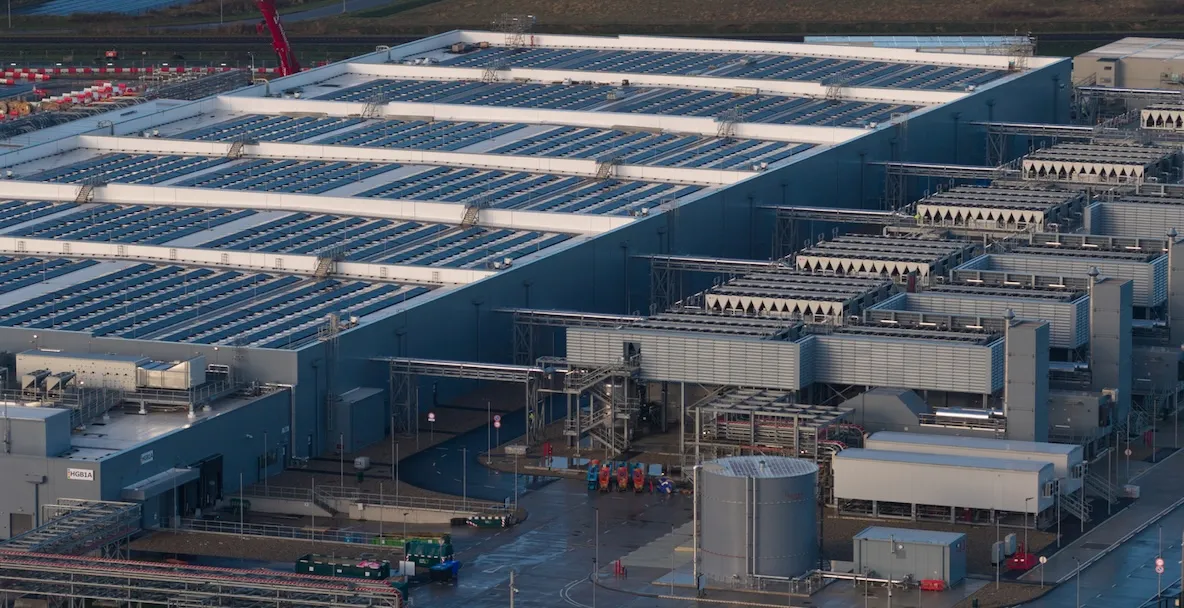
New industry research shows that a single AI server rack holds thousands of chips, mostly advanced nodes, but is not limited to memory or GPUs. Hyperscale data centers, like those hosted by Microsoft or Google, can have hundreds of server racks and consume a large amount of power. With investments still rolling in, multiple organizations are concerned about the impact this could have on their sales and end users.
Industry leaders warn of mounting memory shortages
By now, it’s no secret AI is devouring an outsized portion of memory components as hyperscalers race to build new data centers. While this development has been a boon for the semiconductor industry, other sectors haven’t looked at it so positively.
A group of nine U.S. trade associations made their dissent evident in a letter sent to Commerce Secretary Howard Lutnick and Treasury Secretary Scott Bessent, urging the Trump administration to intervene in what they described as a rapidly deteriorating memory chip market.
The signatories represent telecommunications providers, automakers, medical device manufacturers, and major retailers, among others. Together, they are a snapshot of the broader American economy that has little to do with AI. Therein lies their argument. Though they have little stake in AI, the booming technology is responsible for a massive imbalance in memory supply that has bled into other sectors with unforeseen consequences.
Though the letter serves as a call to action, it’s also a warning. Many of the problems outlined within, including rising consumer electronic prices, production disruption, and higher costs to build and maintain communication infrastructure, are already materializing.
Unfortunately, there is no sign of near-term relief on the horizon. Samsung, SK Hynix, and Micron, which together account for more than 95% of global DRAM output, have already warned that significant memory shortages will persist through at least 2027.
At the same time, the AI infrastructure buildout driving the shortage isn’t immune to it. Constrained memory supply and rising HBM prices are already extending lead times on new server deployments and pressuring the economics of cloud capacity expansion.
As for the rest of the economy, the coalition’s letter is the first coordinated, multi-industry push for federal intervention on memory supply. It’s a sign that companies shouldering the burden of downstream consequences due to AI infrastructure spending aren’t content to keep doing so.
To be clear, the groups stopped short of opposing AI investment, acknowledging the technology’s importance. Instead, they argued that access to advanced memory shouldn’t be a zero-sum competition between AI data centers and the rest of the economy.
To that end, they’ve asked the U.S. administration to work with memory suppliers and buyers, accelerate domestic manufacturing expansion, leverage CHIPS Act programs where possible, and remove regulatory barriers standing in the way of capacity growth. Whether Washington will, or indeed can, respond in a meaningful way is yet to be seen.
But for procurement teams, the politics at play are secondary to the reality at hand. Advanced memory inventory is tight and prices are high. The organizations best positioned to weather this period, regardless of their place in the economy, are those with a diverse sourcing strategy.
Sourceability’s global supplier network and franchise partners, along with our Datalynq market intelligence, give customers essential visibility. Armed with a clear picture and ample supplier options, we help eliminate the need for expensive reactive procurement in today’s constrained market.
Semiconductors dominate the value of AI infrastructure
A joint report from the Semiconductor Industry Association (SIA) and Deloitte released earlier this month puts hard numbers behind what many in the industry already understand. The explosive growth of AI is, at its core, a story of semiconductors.
A virtual teardown of a state-of-the art server rack found that chips account for more than 95% of its value. Just one rack contains over 4,500 packaged chips spanning the full stack. Likewise, semiconductor buying makes up more than half of the total capital expenditure required to build and operate an AI data center.
The component count illustrates why semiconductor demand has spiked in the past few years as companies race to expand their AI capabilities. AI accelerators, ASICs, FPGAs, CPUs, logic chips, HBM, DRAM, SRAM, and NAND are all accounted for, not to mention the power ICs, controllers, and sensors working in the background.
Every layer of the semiconductor stack is necessary for an AI server rack to function, which means a constraint anywhere creates a problem everywhere.
The financial implications are massive. SIA and Deloitte project annual semiconductor revenue from AI data centers could exceed $1.2 trillion by 2028. That would mark nearly tenfold growth in four years. Total data center infrastructure investment through 2028 is expected to surpass $4 trillion, with up to $2.8 trillion of that flowing to semiconductors.
The takeaway is that AI infrastructure demand is generating pressure across multiple categories simultaneously as surging demand touches not just every chip sector, but practically every corner of the global economy. Though memory shortages are concerning, SIA’s teardown makes plain that HBM tightening isn’t occurring in isolation. When investment at this scale is poured into a technology that requires 4,500 chips per rack to function, the entire stack feels the effect.
Given this level of interconnect, governments are starting to realize that advanced semiconductor access is a competitiveness issue even beyond AI. Countries with reliable access to the most powerful silicon have a monumental edge in research, manufacturing, and growth potential. However, policy responses move slowly and supply constraints don’t wait for clean answers.
For companies buying semiconductors right now, the more actionable question is what can be controlled. Diversifying sourcing beyond traditional channels is a good start. Those that haven’t already adopted a proactive, diverse procurement strategy are increasingly exposed, and the cost of correcting that deficit only gets higher with time.
Sourceability helps customers manage supply risks and navigate market shortages by drawing on a global supplier network and franchise partnerships to maintain continuity across critical semiconductor categories.


