HBM demand and ongoing memory shortage hit Apple customers
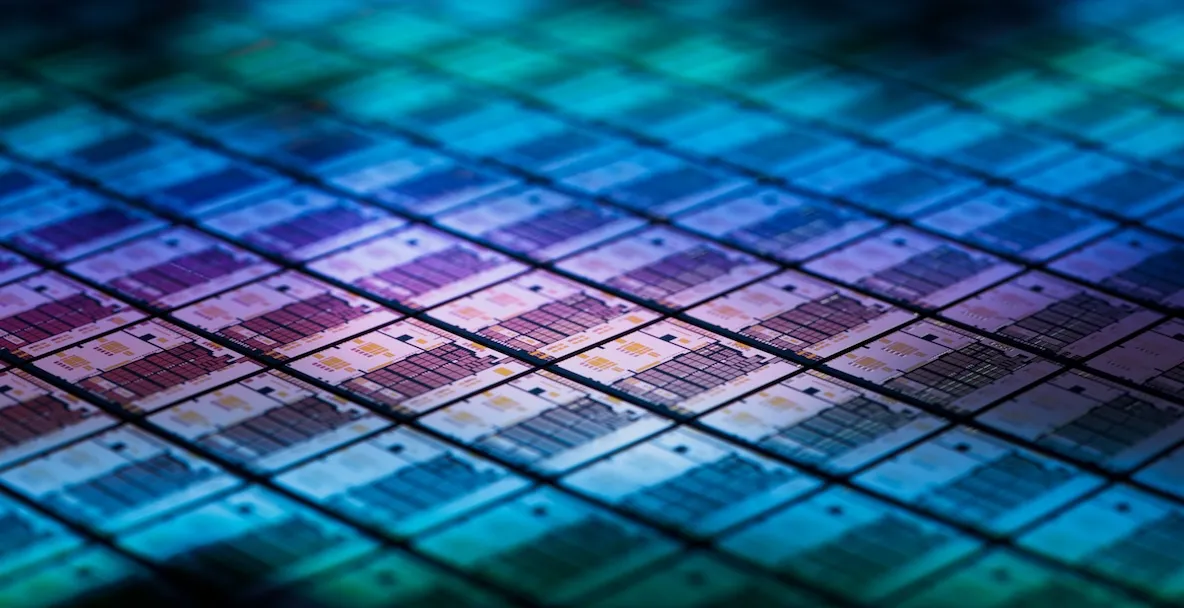
One of the most notable impacts AI has had on the semiconductor supply chain has been the surge in demand for high-bandwidth memory (HBM). As AI infrastructure investments continue to accelerate, memory manufacturers are increasingly prioritizing production for HBM and other high-end memory solutions, creating a ripple effect of line consolidation and dramatic shortages.
These pressures are becoming so significant that even the world's largest technology companies are facing challenges in securing a sufficient supply of memory. Apple has announced plans to raise prices on its products later in the year, around the time its next generation goes to market. Meanwhile, the broader industry continues to grapple with rising prices with no relief in sight.
AI-driven memory shortages impact the broader technology market
It takes monumental force for market headwinds to affect tech giants like Apple. The current AI frenzy has met that threshold, spelling trouble for even the world’s largest companies.
Apple CEO Tim Cook recently confirmed in a Wall Street Journal interview that price increases are coming, describing the memory situation as “unsustainable” and the hikes themselves as “unavoidable.”
For years, Apple has managed to absorb cost pressures through sheer procurement leverage. Now, as its next generation of devices is expected to arrive later this year, it appears the pressure dial has officially been turned too far.
With just three suppliers dominating global memory production (Samsung, SK Hynix, and Micron), decision-making within those organizations carries huge implications for entire market. In response to AI-driven demand, the Big Three have redirected swaths of wafer capacity toward HBM and other high-end products destined for data centers.
Notably, for every one unit of HBM that is produced, roughly three units of conventional memory are displaced. As HBM demand continues to accelerate alongside AI infrastructure development, that ratio taxes every other memory category.
The downstream exposure spans the entire electronics landscape. Smartphone OEMs, PC manufacturers, and device makers of all sizes are competing for a shrinking share of DRAM and NAND components.
Cook’s recent comments illustrate the severity of the shortage. If a company with the procurement scale, budget, and long-range planning capabilities of Apple can’t absorb the shortage without raising prices, it’s hard to imagine any company doing so.
With Apple now facing a shortage of third-party memory, competition in the smartphone market could be due for a shakeup. Samsung may be in a position to benefit given its vertical integration in device making and memory production. However, other Android OEMs will face the difficult decision to cut specifications, raise prices, or absorb ever shrinking margins.
Though new memory fabs are under construction, meaningful capacity relief is years away. Moreover, there’s no guarantee incremental output increases won’t be captured by AI-driven HBM demand before the conventional memory market gets its share. As such, it’s almost certain more companies will follow Apple’s lead in the coming days.
For procurement teams and supply chain managers navigating the memory shortage, the time to act is now. Sourceability’s franchise supplier relationships and diversified global sourcing infrastructure help alleviate shortages by giving customers a path to vetted memory inventory and more stable pricing, even as the market continues to tighten.
AI demand continues to drive memory market expansion
The numbers emerging from the memory market in the first half of 2026 continue to tell a story procurement teams can’t afford to ignore. According to TrendForce, contract prices for NOR Flash rose roughly 100-120% during the period, while SLC NAND climbed even higher, up to 130-150%. These figures point directly back to the structural reallocation of production resources toward HBM and advanced-layer 3D NAND to support demand from AI hyperscalers.
The demand side of the equation offers little hope of relief. Aside from the massive cloud-based data center rollouts, AI inference is growing more popular in edge devices, exponentially increasing memory requirements.
As TrendForce notes, “In industrial control systems, satellite communications, and aerospace equipment, NOR Flash remains difficult to replace due to its reliability advantages.”
Meanwhile, at the other end of the spectrum, AI servers consume memory at a scale that dwarfs traditional servers. A single Nvidia Blackwell cluster can draw on tens of thousands of gigabytes of HBM. With numerous organizations racing to expand their AI compute, the buildouts are consuming an enormous share of available fab capacity.
Given the rapid expansion of AI on two fronts, the market is likely nowhere near its peak. Industry analysts project that NOR Flash prices could rise an additional 60-65% in the back half of 2026. SLC NAND prices are expected to jump by another 70-75% in the same period.
Even at this slower pace, prices in the memory segment at year-end will be dramatically higher than at the start. As buyers work to offset this pressure, suppliers are also shifting how they manage allocation. Many have moved to long-term agreements and selective order acceptance rather than open-market availability. This places companies without established supplier relationships at an even greater disadvantage, often limiting them to unpredictable and expensive spot market buys.
Regardless of industry, memory has become one of the most strategically important categories in the semiconductor supply chain. With shortages expected to persist in 2027, reliable access increasingly depends on strong relationships with suppliers.
Sourceability helps organizations secure access to critical memory products through our global supplier networks, alternative sourcing options, and procurement solutions designed to reduce supply chain risk. Our teams of sourcing experts can connect you with vetted sources across multiple regions to help you avoid disruption when standard channels fall short.


