Japan 7.1 earthquake raises chip concerns amidst historic growth
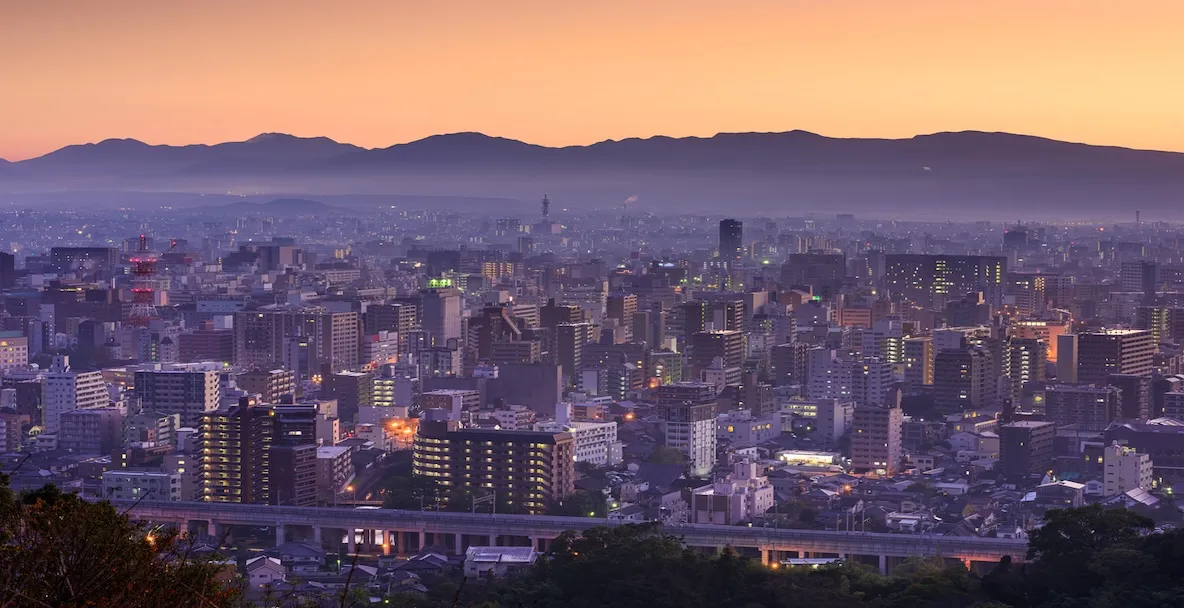
The semiconductor industry continues to experience historic expansion as AI and cloud computing drive record levels of investment and demand. Governments are increasing support for domestic manufacturing while semiconductor companies simultaneously pour in billions of dollars in investments to expand capacity.
The recent earthquake in Japan's Kumamoto Prefecture serves as a reminder that natural disasters remain one of the most significant risks to global supply continuity. While manufacturers moved quickly to inspect facilities and resume operations, even temporary production interruptions can create long-term ripple effects downstream.
Massive earthquake rocks Japan’s Kumamoto region
A magnitude 7.1 earthquake rocked Japan’s Kumamoto Prefecture on July 28, killing at least 38 people and halting production across one of the world’s most densely clustered semiconductor manufacturing hubs. Kyushu, the southwestern island where Kumamoto is located, has earned the moniker “Silicon Island” thanks to its accounting for more than a third of Japan’s total IC production.
The strategic importance of the region quickly turned a fatal natural disaster into a supply chain event of its own. Numerous factories and fabs went offline in the aftermath as workers moved in to assess structural and equipment damage. Though most have now resumed production at least in some capacity, the fallout of such a significant disruption will be difficult to quantify in the coming months.
Kumamoto is home to many facilities supporting advanced chip production and equipment making, including those belonging to Tokyo Electron, Sony Semiconductor Solutions, Renesas, and TSMC.
The cluster is one of several regional hubs playing an increasingly larger role in chip production by centralizing expertise and manufacturing. Pairing TSMC's fabs with Sony's image-sensor production and Renesas's automotive chipmaking builds a self-reinforcing supply base, while Tokyo Electron's equipment ties the region to fabs worldwide. It's also part of TSMC's push to diversify beyond Taiwan amid geopolitical tension.
Sony’s Kumamoto Technology Center is an example of how much single-site concentration is baked into today’s supply chain. The facility reportedly produces four million CMOS image sensors daily. With output not expected to recover to pre-earthquake levels until mid-August, every downstream buyer that depends on its components will feel the impact since no other supplier operates at comparable scale.
TSMC’s situation also illustrates why natural disasters have an unpredictable effect on an organization’s logistics. Work at TSMC’s JASM Fab 2, still under construction, was resumed just days after the quake. However, its Fab 1, already in volume production of logic chips, stayed under inspection past the one-week mark as calibration was needed to ensure proper functioning of its sensitive equipment.
The automotive sector took a significant hit as well, with Toyota and Nissan both delaying production at several facilities in the area, including one more than 600 kilometers away from the earthquake’s epicenter. With automakers ramping up ahead of Q4 holiday-season demand, those delays raise the question of how much slack remains in the schedule before shortages reach dealer lots.
Elsewhere in the region, recovery moved faster. Tokyo Electron resumed operations within days, reporting limited damage to its facilities. Renesas followed in phases as it cleared safety checks site by site. After the 2016 Kumamoto earthquake, a damaged Renesas plant lost a significant portion of its in-process wafers and took months to recover.
Japanese manufacturers have invested heavily in earthquake-resistant construction and inspection protocols to safeguard their facilities in what is one of the world’s most seismically active regions. Fortunately, widespread damage to semiconductor manufacturing infrastructure across the prefecture seems to have been avoided in this instance.
Even so, this disaster highlights why operational preparedness and rapid recovery capability are central to resilient manufacturing in the world’s most important chip hubs.
The semiconductor industry reaches new growth
The recently released annual SIA State of the U.S. Semiconductor Industry report paints an impressive picture of both the industry’s explosive growth and potential to maintain it in the face of numerous economic challenges.
Last year, global chip sales reached a record $795.6 billion. The mark exceeded nearly all initial forecasts by a wide margin thanks to historic demand generated by AI and hyperscale computing.
According to the World Semiconductor Trade Statistics organization, 2026 will be even bigger, with semiconductor sales projected to reach $1.5 trillion.
AI infrastructure buildouts are the catalyst for much of that growth. A single AI server rack now contains more than 4,500 packaged semiconductors and chips account for over 95% of a rack’s value. SIA and Deloitte estimate global AI data center investment will exceed $4 trillion through 2028 with as much as $2.8 trillion of that directed toward semiconductors.
Demand is also rising quickly beyond AI, with growth spanning advanced computing, 5G and emerging 6G communications, healthcare devices, defense systems, and automotives.
The U.S. has made immense strides in semiconductor investment with some $76.8 billion in R&D spending and more than $770 billion in announced private-sector manufacturing investment since 2020 across more than 160 projects in 30 states. Thanks to this push, U.S.-headquartered companies captured over 53% of global market share in 2025, the nation’s highest mark since 1984.
Around the world, governments are investing just as aggressively as competition for talent, fab capacity, and supply chain positioning intensify. Persistent workforce shortages and the continued geographic concentration of critical manufacturing steps remain among the industry's most cited structural risks.
Despite record revenue growth, simply throwing money at these problems isn’t an effective solution. Long-term competitiveness will be determined by continued investment in materials and equipment, as well as manufacturing, design, and workforce development.
Meanwhile, the recent disaster in Kyushu is a reminder that industry expansion and exposure are rising in tandem. The more concentrated a hub becomes, the more a single event can ripple through the global supply chain.
Kyushu’s facilities recovered quickly this time, but as the industry’s growth increasingly relies on a small number of regional clusters, the next disruption may not be contained so easily. For this growth cycle to last, record capital investment in capacity must be matched with geographic diversification and supply chain resilience.


