
Record semiconductor market growth contributes to high consumer costs
Record semiconductor growth is colliding with rising memory costs, creating new pricing and sourcing pressures across consumer electronics.
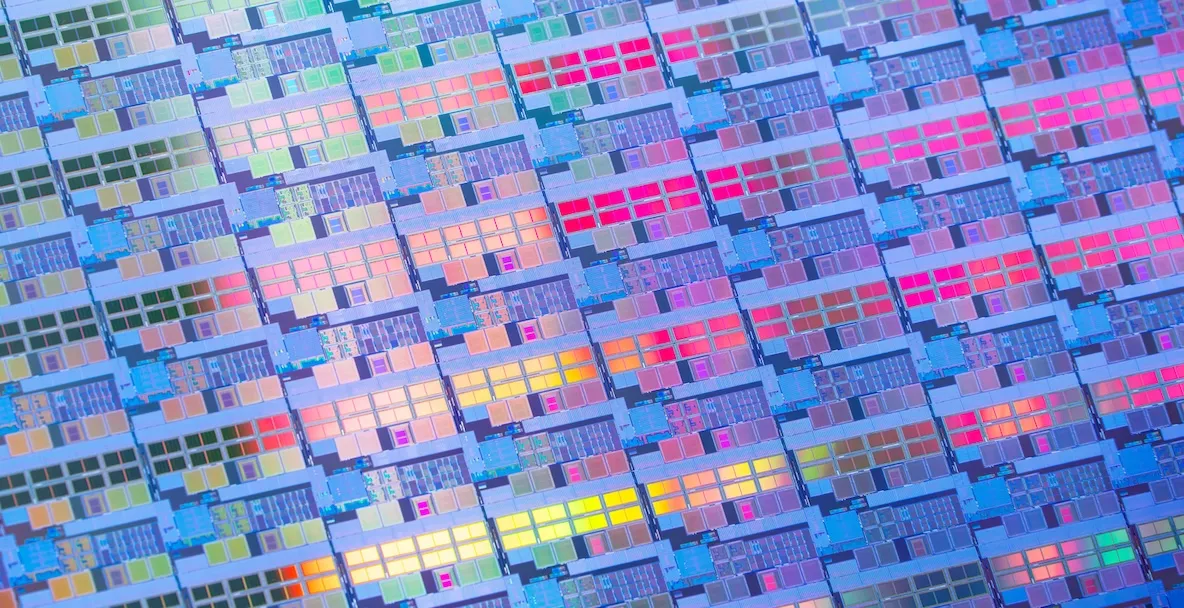
Looking into next year, the semiconductor industry is heading into unprecedented territory. The Semiconductor Industry Association (SIA) projects global chip sales to reach $1.5 trillion in 2026, nearly doubling from a year ago.
AI and advanced computing are serving as the major demand drivers for this historic high. SIA estimates more than $4 trillion could be invested in new data center infrastructure through 2028, with up to $2.8 trillion allocated toward semiconductors.
But rapid industry growth is not translating into lower component costs across every market. The consumer electronics segment has watched demand drop off after memory prices have pushed up end-user costs. Even Apple is preparing for substantially higher prices across its iPhone 18 lineup, with TrendForce estimating a 10–20% increase.
AI drives semiconductor growth to historic levels
In 2025, global semiconductor sales reached $795.6 billion, and the World Semiconductor Trade Statistics (WSTS) organization projects that figure will climb to $1.5 trillion in 2026. Should this come to pass, it would be the first time total sales exceed $1 trillion.
However, according to SIA’s 2026 State of the Industry report, the growth is concentrated in a few key sectors, largely thanks to AI demand. Logic sales rose 38.8% year-over-year to nearly $300 billion in 2025, while memory sales climbed 39% to $230 billion. The two categories together account for the vast majority of the industry’s expansion.
Computers and AI applications increased their share of global semiconductor end-use revenue from 35% in 2024 to 45.5% in 2025, easily overshadowing every other end market thanks to growing chip density in AI applications.
A single modern AI server rack now contains more than 4,500 packaged chips spanning logic, memory, and analog. Moreover, semiconductors now account for more than 95% of that rack’s total value. As tech giants and governments race to build out new data centers, each containing thousands of server racks, the volume of chip demand tied to AI buildout has become the defining influence on the current market cycle.
Of course, this concentration comes with consequences outside the data centers. As fabs and advanced packaging lines prioritize output for the highest-margin AI segment, other markets are left competing for the remnants. Pricing power has shifted accordingly as manufacturers now hold most of the cards when it comes to setting allocations and unit costs.
SIA also called out several wildcards capable of disrupting the chip industry’s skyward trajectory, including natural disasters, geopolitical conflict, trade restrictions, upstream material shortages, and manufacturing equipment constraints. Indeed, the past several months alone have seen every one of these factors affecting real-world operations across the globe.
Each of these influences sits upstream of finished chip supply, so disruption in any one category can have a pronounced effect on lead times and prices before reaching end products. For an industry scaling toward $1.5 trillion in annual sales, the same demand concentration fueling record growth also narrows the margin for error should any of these wildcards substantially materialize in 2027.
For procurement teams, the practical takeaway is that component costs are increasingly tied to AI-related decisions rather than traditional demand cycles. Sourceability’s Datalynq market intelligence platform gives buyers visibility into lead times, availability, and pricing shifts as they happen. We also help customers with diversified global sourcing and strategic inventory planning to help reduce exposure to allocation pressure as the market tightens.
Rising memory costs push iPhone 18 prices higher
Apple’s upcoming iPhone 18 launch is a telling illustration of just how potent the effect of AI-driven chip demand is on the consumer electronics space. According to TrendForce, retail prices across the device lineup are expected to rise roughly 10% to 20%, with memory costs doing most of the damage.
TrendForce estimates memory costs for the 256GB iPhone 18 Pro will be nearly 400% higher year-over-year in the third quarter of 2026. That is a difficult pill to swallow even for one of the world’s largest device manufacturers.
Apple has reportedly pushed its other suppliers for lower pricing on non-memory components, but any savings found are not expected to offset what memory is adding to the bill of materials. Postively for consumers, Apple is expected to absorb part of the increase rather than passing the full cost along.
While that strategy may prevent the sticker shock of a price hike even larger than 20%, it also narrows margins on every device sold. It’s likely Apple will now count on its Apple Intelligence cloud services and subscriptions to play a larger role in maintaining profitability.
Apple’s first foldable line, arriving with “Duo” branding, will occupy its own pricing tier. TrendForce puts its starting price at $2,099 to $2,299, with top configurations potentially exceeding $3,000.
The premium foldables category continues to be an interesting wrinkle in the slumping smartphone space but is still struggling to gain much share. TrendForce estimates foldables will account for just 2% of the global smartphone market in 2026. Whether one of the most loyal fanbases in tech is willing to shell out the price of a high-end gaming laptop for a new iPhone remains to be seen, and the answer will likely steer the category’s trajectory in the years to come.
Of course, Apple’s pricing situation isn’t an isolated story. As AI’s share of semiconductor demand expands, securing product is often a question of how much capital buyers have to spend. But even the world’s largest electronics manufacturers can’t fully offset a nearly fourfold yearly increase in memory costs.
For procurement teams operating with far less leverage than Apple, success now depends on the ability to anticipate where AI demand is redirecting capacity and embracing diverse sourcing strategies that can respond to both shortages and rapid cost movements. Sourceability helps buyers identify global inventory and vetted alternative supply options to plan purchases earlier and reduce exposure to the sudden escalations of today’s chip market.
Read next
See all updates


