New Section 232 polysilicon tariffs may influence chip expansion plans
Memory manufacturers are expanding AI capacity while new U.S. trade policies introduce additional supply chain challenges.
AI continues to consume large amounts of supply, prompting major suppliers such as SK Hynix and Samsung to commit billions of dollars to new fabrication facilities and cleanrooms. These new facilities aim to support elevated demand for HBM memory and advanced DRAM products, both of which are essential for AI servers and hyperscale data centers.
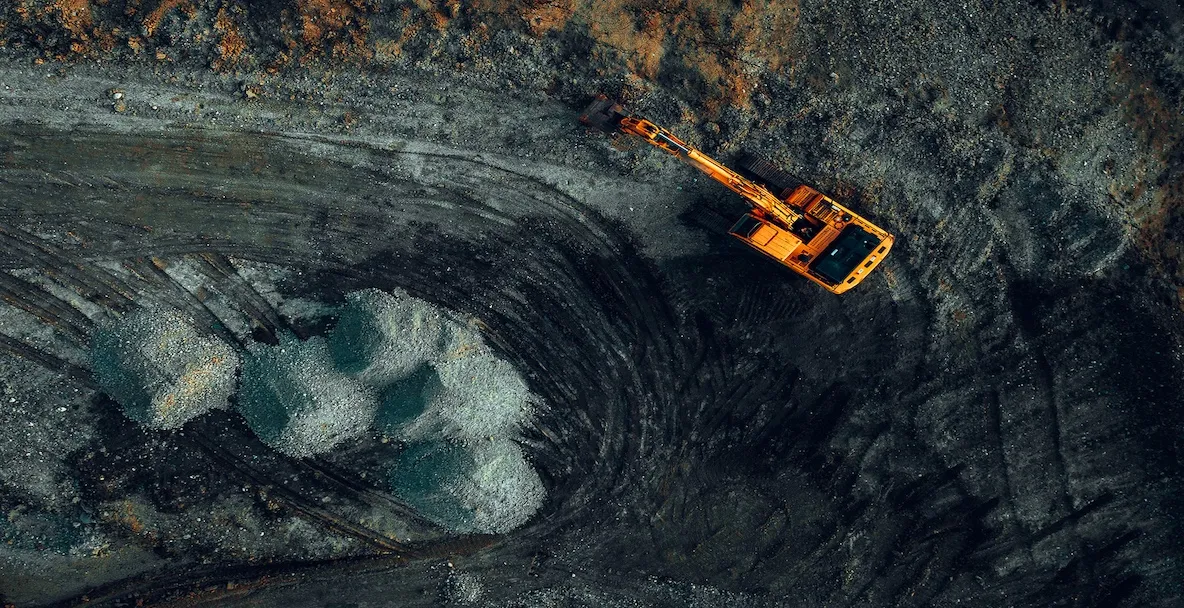
Meanwhile, new geopolitical policies are on the rise, sometimes running afoul of the latest semiconductor growth plans. The latest U.S. tariffs targeting imported polysilicon, a critical material used in semiconductor manufacturing, are one such policy. The new tariffs will take effect in December, introducing a new wrinkle even as the semiconductor industry grapples with high raw material costs tied to AI demand and other geopolitical challenges.
This could leave buyers facing a new wave of price adjustments by suppliers, directly tied to raw material costs, at the start of 2027.
Memory manufacturers expand capacity for AI growth
In the face of heightened demand from AI-adjacent buyers, memory makers SK Hynix and Samsung are accelerating fab construction timelines that were, until recently, planned by the decade. According to TrendForce, both firms plan to bring new facilities online within the next five years, with some cleanrooms opening even sooner.
SK Hynix’s board approved a combined investment of roughly 54.3 trillion won ($39 billion) for its Cheongju M17 and Yongin Y2 fabs.
The latter, accounting for roughly two thirds of the investment, will be a dedicated DRAM production hub spanning roughly 1.13 million square meters. It’s the second of four fabs planned in the Yongin Semiconductor Cluster. Construction is slated to begin just under a year from now, with the first cleanroom targeted for June 2029.
Notably, SK Hynix now plans to complete all four of its Yongin fabs by 2033. If it achieves this feat, the project would be done 12 years ahead of its original 2045 target.
Cheongju M17, SK Hynix’s new NAND fab, will have a footprint of roughly 680,000 square meters. The site was selected due to its proximity to the company’s M11, M12, and M15 fabs, allowing it to lean on existing manufacturing infrastructure, per TrendForce. The first cleanroom at Cheongju M17 is scheduled for a December 2028 debut.
At the same time, Samsung has accelerated the timeline for its Pyeongtaek P5 complex, where construction began last month. With the exterior structure already complete and the project running roughly six months ahead of schedule, Samsung is also moving to launch its P5 Fab 2 in parallel rather than sequentially.
Moreover, Samsung has also compressed its timeline for six fabs at its own Yongin National Industrial Complex by seven years, aiming to bring them online by 2040.
Both companies’ willingness to shorten multi-decade roadmaps into multi-year sprints at the cost of billions in new capital reflects the impact AI has had on capacity planning across the memory sector.
Even so, new facilities take years to reach full output regardless whether construction is aggressively sped up. Neither company’s expansion meaningfully changes the memory supply picture before 2028 at the earliest.
For buyers navigating today’s tight memory market, Sourceability can help. A diversified franchise portfolio remains one of the more reliable ways to secure allocation, and our global reach connects you with available inventory when and where you need it.
US Section 232 polysilicon tariffs could reshape trade
The Trump administration recently signed an executive order imposing a new 15% tariff on imported polysilicon and its derivatives. The order also establishes minimum import prices for the material, a critical input in semiconductor manufacturing. Both measures are scheduled to take effect in December following a national security investigation into overseas polysilicon production.
Commerce Secretary Howard Lutnick recommended the combined tariff and price floor approach, with the administration framing the action as a correction for decades of eroding domestic capacity. In 2005, U.S. polysilicon production accounted for roughly half of global output. By 2024, that share had shrunk to just 2%.
China now dominates global polysilicon production, with industry sources citing a 93% share of the market. As expected, Beijing’s response was immediate. China’s embassy characterized the move as a serious disruption to bilateral trade and signed retaliatory countermeasures which were later expanded.
Polysilicon sits upstream of both semiconductor manufacturing and solar panel production and has applications within some military systems. Given the trade animosity between the U.S. and China in recent years, it’s easy to see the allure of diversifying production and increasing domestic capacity.
The Trump administration argues the new order and its inbuilt incentives will help revitalize the American polysilicon sector. Two primary U.S. producers, Hemlock Semiconductor and Wacker Chemie, are well positioned to benefit from the move.
For semiconductor supply chains, the immediate effect is likely to be higher costs. The new polysilicon tariffs don’t directly constrain output the way geopolitical export controls may, but they do raise the cost basis for a material with no near-term domestic substitute. As governments around the world become increasingly protective of their domestic supply chains, this combination of limited alternative sourcing options and rising costs is becoming more common across many of the chip sector’s most important upstream materials.
In the coming months, procurement teams will need to monitor not only semiconductor production trends but also evolving trade policies that affect upstream materials and manufacturing inputs as they build proactive strategies for the years ahead.
Read next
See all updates