Semiconductor labor shortage throws off efforts to expand capacity
Global chip capacity is expanding rapidly, but workforce shortages could limit how quickly new semiconductor investments translate into supply.
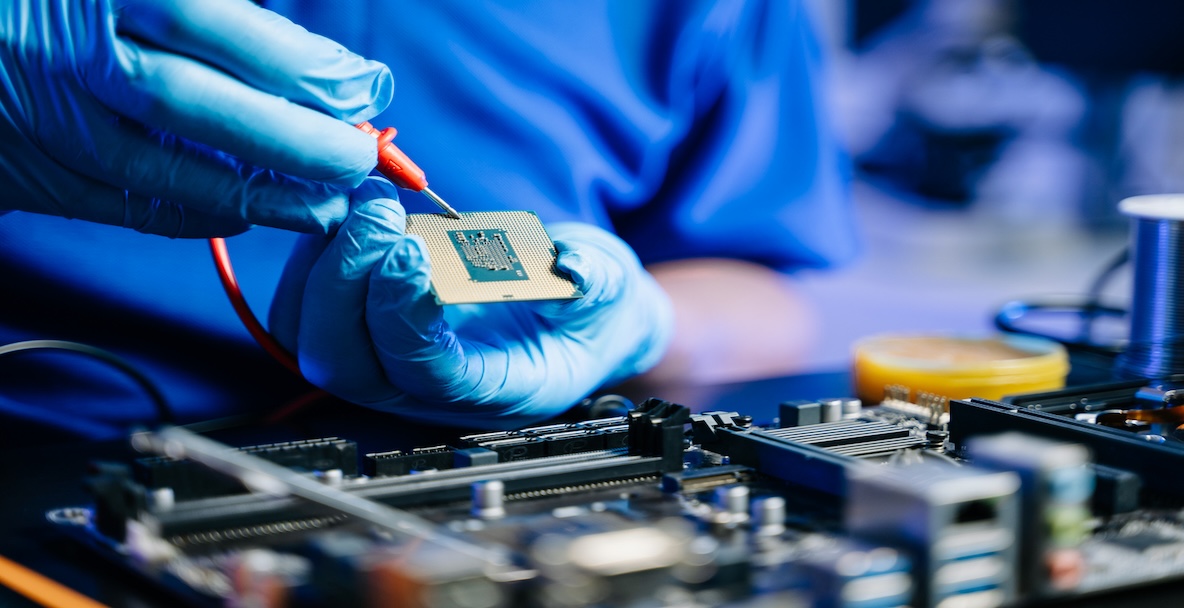
The U.S. semiconductor industry’s push to grow domestic manufacturing is gaining momentum, but the labor shortage continues to hinder plans. A McKinsey and SEMI Foundation report estimates the U.S. could face a shortage of as many as 157,000 semiconductor workers by 2030. As the U.S. administration considers new tariffs for semiconductor imports, expansion plans by major chipmakers like Samsung, TSMC, Micron, and Intel could struggle to come online.
While the U.S. runs into hiccups amidst its reshoring efforts, India continues to grow as an important part of the global semiconductor supply chain. Nexperia and Tata Electronics have announced a broad partnership spanning wafer fabrication, assembly, testing, and technology development. Nexperia plans to produce MOSFETs at Tata’s upcoming 300mm fab in Dholera and assemble and test discrete products at its Jagiroad facility. This decision comes amid Nexperia’s separation from its parent company late last year due to a Dutch court investigation and ruling.
US chip expansion stumbles from labor shortage
The U.S. semiconductor labor shortage is manifesting as a significant bottleneck for the country’s chip ambitions. According to a McKinsey and SEMI Foundation report, the U.S. could be short by as many as 157,000 semiconductor workers by the end of the decade. The gap is proving difficult to close, even as chip giants TSMC, Intel, Samsung, and Micron aim to bring new domestic capacity online to support AI demand.
Per the report, just 3% of U.S. engineering graduates entering engineering jobs elect a position in the semiconductor industry. Further, nearly three quarters of chip employers report significant difficulty filling engineering roles.
For decades, advanced semiconductor manufacturing expertise has been condensed in Asia, which is where the deepest talent pools remain. Contrary to popular belief, chip salaries in the U.S. often fall short of those in Asia, often resting between $127,000 and $187,000. South Korean chip workers have recently seen bonuses alone soar past $500,000 amid strike threats and a culture that puts chip jobs on a pedestal.
Stateside, proposed fab timelines leave little runway for the industry to close the labor gap. Samsung aims to start production at its two Taylor, Texas, fabs later this year. The expansion is projected to bring roughly 3,500 chip jobs to the region. TSMC’s 3nm fab in Arizona is expected to come online in 2027 after its timeline was moved up from 2028.
Thousands of engineers, technicians, equipment specialists, supply chain professionals, and experienced manufacturing personnel are required for each new fab before announced capacity can be counted as reliable output. Unable to meet those demands with U.S. workers, chipmakers including Samsung and SK have been forced to temporarily bring experienced chip talent from South Korea to support fab ramp-ups.
Recruiting foreign talent through H-1B visas has become costly and increasingly cumbersome, so chipmakers point to a domestic pipeline as the long-term answer. That pipeline is starting to take shape, largely at the level of academia.
TSMC is recruiting from universities to fill roughly 6,000 positions across its first three Arizona fabs. Purdue and Arizona State University have launched semiconductor programs, with Applied Materials contributing $200 million to the latter’s cleanroom center. In Ohio, Intel has committed $50 million to scholarship programs.
More than 80 community colleges across the U.S. have launched or expanded their semiconductor programs since the CHIPS Act passed in 2022. However, programs like these require years to produce graduates, not considering the additional years of on-the-job learning needed to cultivate expertise, while fabs are trying to open right now.
Ultimately, the ongoing struggle to grow a domestic semiconductor workforce is a prime example of why capacity investment alone can’t solve constraints on fab expansion. With AI devouring capacity, delays in staffing new facilities could extend existing supply imbalances even as these investments are hailed as a solution to the massive demand for new chips.
For now, new U.S. fab announcements should be treated as a long-term supply signal rather than near-term relief. Maintaining diversified sourcing options across regions and manufacturers continues to be a vital strategy in this market for the meantime.
Nexperia and Tata expand India’s chip ecosystem
According to a Reuters report, Nexperia has announced a partnership with Tata Electronics to manufacture and package chips in India. The agreement covers both front-end wafer fabrication and back-end assembly and testing, as well as technology and ecosystem development.
Nexperia now plans to make a broad range of its MOSFET portfolio at the $11 billion 300mm semiconductor fab Tata is building in Dholera. The facility, described as India’s first AI-enabled state-of-the-art fab, is designed to handle up to 50,000 wafers per month, with first production runs slated for December 2026. The two will collaborate on assembly and testing of Nexperia’s discrete semiconductor products at Tata’s packaging facility in Jagiroad.
The deal follows a turbulent period for Nexperia after the Dutch government intervened in a September 2025 move the company said was meant to stop operations from shifting to China. Beijing responded by temporarily banning exports of Nexperia chips packaged in Dongguan, leaving global automakers facing a shortage of chips.
Both governments have since reversed course, but the company remains geopolitically divided. Notably, Nexperia’s current management board has endorsed the Tata agreement, per Reuters.
Restrictions on products shipped from the Dongguan packaging site have become a clear example of how high-value assembly lines can be stalled when simple single-source components are disrupted. The Tata agreement gives Nexperia a second geographic option for both wafer production and back-end work, helping address that weakness.
It’s also a boon for India’s chipmaking ambitions. The government’s India Semiconductor Mission approved Semicon 2.0 earlier this year, committing roughly $13 billion to furthering its domestic chip industry. As of September 2026, the program has approved 12 projects backed by over $17 billion in combined investment.
Tata CEO Randhir Thakur described the deal with Nexperia as a step toward building “a globally competitive, integrated semiconductor manufacturing ecosystem in India.”
Read next
See all updates