AI supply chain risks mount as policy changes impact materials
Regulatory uncertainty surrounding U.S. AI infrastructure and China's tungsten export restrictions are creating new challenges for global electronics manufacturing.

Following the recent U.S. midterm elections, Texas has emerged as a focal point for potential changes to data center regulations. Major Taiwanese manufacturers, including Foxconn, Wistron, and Wiwynn, have committed billions of dollars to expanding AI server manufacturing in the state. However, proposed restrictions on new development and a greater focus on sustainability could complicate longer-term expansion plans, particularly for projects scheduled beyond 2027.
Meanwhile, the industry’s dependence on critical raw materials has steadily driven up downstream prices. Restrictions on China’s tungsten exports are increasing costs for the precision drill bits used to manufacture printed circuit boards (PCBs) and advanced chip substrates. With China accounting for nearly 80% of global tungsten production, supply disruptions are affecting manufacturers across Japan, Taiwan, the U.S., and Europe.
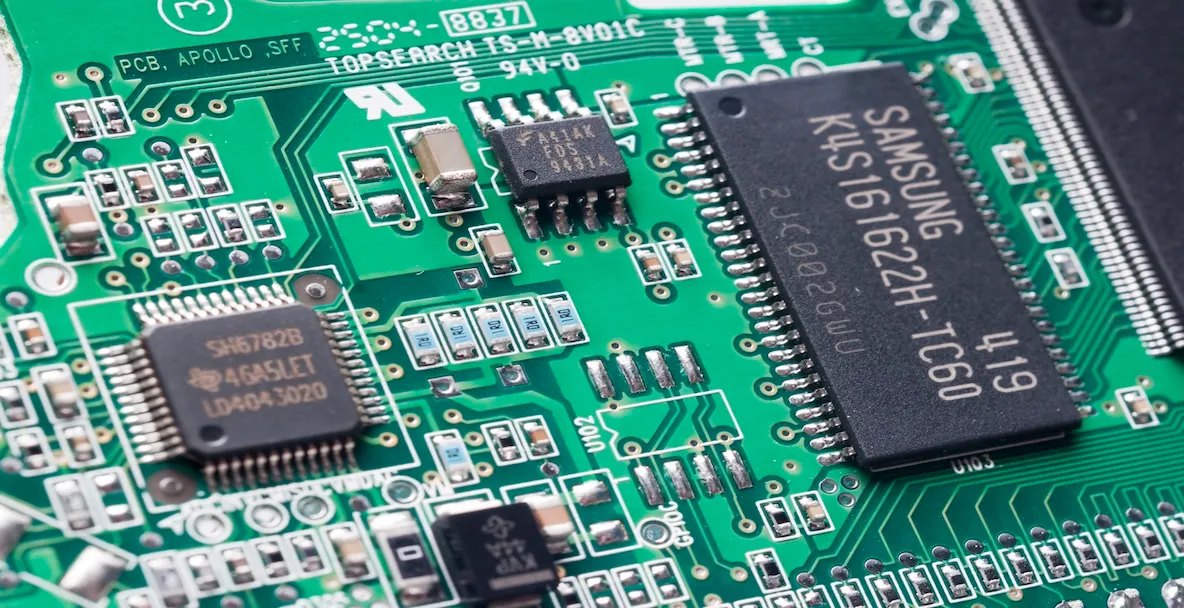
PCBs have also been under-discussed amid more dramatic shortages in the memory and power segments. As the backbone of modern electronics, the changes happening in the PCB supply chain could greatly impact the wider market.
Texas policy changes introduce uncertainty for AI expansion
Over the past two years, Texas has become a major stateside production hub for Taiwanese manufacturers including Foxconn, Pegatron, Compal, Wistron, and Wiwynn. Generous investment incentives drew these firms to the Lone Star State, but the November midterm election results may add a new variable to their expansion plans.
Texas Governor-elect Gina Hinojosa has pledged to pause approvals for new data centers until stronger community protections are in place. Her proposals center on water supplies, electricity costs, and local oversight. If enacted, AI infrastructure development in the state could be delayed.
The proposed restrictions target data center approvals rather than manufacturing plants producing AI server hardware. Yet, manufacturers are exposed indirectly as timelines for bringing new U.S. computing capacity online may be in jeopardy. TrendForce warns that, along with Texas, both Ohio and Georgia could adopt similar restrictions on data center development. These three states account for a significant share of planned U.S. data center capacity.
For now, Taiwanese manufacturers are reportedly holding course despite the looming threat of delays. Foxconn, Pegatron, Compal, Wistron and Wiwynn have kept their Texas schedules intact, according to Commercial Times, with combined commitments above $7 billion. Several sites in Texas are already producing, and others aren’t far behind.
Pegatron is shipping NVIDIA GB200 and GB300 systems from its Texas facility. Foxconn operates six factories in the Houston area with more expansion underway as it focuses on rack- and cluster-level integration for AI.
Wistron opened its first U.S. plant, D1 in Fort Worth, in July and its larger D2 facility is expected to begin operations in 2027. Wiwynn opened a facility in Socorro, near El Paso, in September 2026. A second building is expected to begin production in Q2 2027. Compal, meanwhile, is targeting trial production at its Texas facility in Q4 2026 with mass production expected in Q1 2027.
Given the uncertainty, project timelines are currently the biggest determinant in how much risk the expansion roadmap faces. Most AI data center projects scheduled for 2027 are already under construction. However, projects planned for 2028 and later carry far more risk as their futures are now tied to whether new restrictions take effect before they break ground and how those rules are written.
Even without outright restrictions against new data center projects, policy appears to be moving toward developers carrying more of the burden for electricity, infrastructure, water use, and community impact planning. While the strategic importance of AI remains high, it’s likely that future expansion will see developers facing more obstacles than they have to this point.
Tungsten restrictions drive PCB manufacturing costs higher
Memory and power shortages have dominated recent headlines, but upstream, a less visible constraint is also building. China’s restrictions on tungsten-related materials have affected buyers in Japan, Taiwan, the U.S. and Europe, contributing to a significant price increase for the micro drill bits used in PCB and substrate fabrication.
These tungsten carbide bits are used to drill the incredibly precise holes allowing for electrical connections between the layers of a circuit board of chip substrate. Because the bits wear out and are replaced throughout production, they are sensitive to changes in material costs and prices respond quickly.
Today’s pressure traces back to early 2025, when China placed export controls on several tungsten-related materials alongside bismuth and molybdenum. According to U.S. Geological Survey data, China processed roughly 79% of the world’s Tungsten in 2025, giving it significant leverage in the global market.
Ammonium paratungstate (APT) is an intermediate tungsten product that serves as the market’s key pricing benchmark. Between February 2025 and early October 2026, its price climbed roughly 149%, according to data cited by Nikkei, revealing how much influence China’s export curbs have on the market.
Amid the fast-moving AI server rollout, the timing could hardly be worse. To keep up with advanced accelerators, AI server PCBs are becoming thicker and more complex as manufacturers increase layer counts and employ harder materials. These factors make drilling more difficult and wear through bits faster.
Taiwanese drill bit maker Topoint Technology reports that multilayer AI server boards now require four to five bits per drilling set. The company is responding by developing longer, higher-aspect-ratio drill bits to accommodate thicker boards. For PCB and substrate producers, this trend is doubly problematic with each board now consuming more bits even as each bit costs more than it did before.
Per TrendForce, suppliers of high-end tungsten carbide materials for precision cutting tools are vulnerable to “China’s dominance in refined tungsten materials and powders.” Firms including Sumitomo Electric, Kyocera, Mitsubishi Materials, Kennametal, and Sandvik have significant manufacturing experience, but this can’t sever their reliance on China’s exports.
Chinese drill bit producers, meanwhile, are living a very different reality. Guangdong Dtech Technology and Shenzhen Jinzhou Precision Technology have gained market share with access to cheaper domestic tungsten and domestic investments are poised to bolster capacity by adding hundreds of millions of micro drill bits.
Several countries are working to expand tungsten production and reduce their reliance on China. However, new mining, refining, and manufacturing capacity takes years of investment and permitting. Until these projects come online, the cost of China’s tungsten export restrictions will continue flowing downstream into PCB manufacturing costs and, ultimately, AI server pricing.
This tungsten trend is a reminder that critical material shortages and price increases rarely stay contained to the raw material itself. Nor are they a problem to be solved in a vacuum. Higher costs and growing PCB complexity are now combining with the prospect of tighter data center regulations to threaten the pace of future AI deployment in the U.S.
With sustainability also becoming a stronger counterweight to rapid data center development, some slowdown appears likely. Whether these factors are enough to throw off previously forecasted AI growth remains an open question.