AI costs will fall despite growing semiconductor supply chain risks
The semiconductor supply chain has been experiencing an uninterrupted stream of disruptions since the AI explosion. In the last few quarters, price volatility has been one of the major symptoms. Low availability of memory modules is expected to persist until 2030, according to memory leaders, with allocation-only models dominating.
New reports from Gartner indicate that AI could become much more cost-effective by 2030. With advances in large language models (LLMs), the hefty price tag associated with AI initiatives could become more manageable. As far as supply is concerned, however, if AI remains popular among enterprises, we could see another lengthening of component unavailability as more companies can afford it.
AI inference costs are dropping
Generative AI providers in 2030 may see running inference on a trillion-parameter LLM cost some 90% less than it currently does, according to a new Gartner forecast. Compared to 2022, LLMs of similar size are expected to become 100 times more cost-efficient in the span of less than a decade.
Gartner points to several drivers behind the cost compression. Semiconductor and infrastructure efficiency improvements, model design innovations, more efficient chip utilization, and the use of edge devices for specific use cases all have a hand in lowering costs. The last point is significant for the supply chain.
As inference workloads shift toward purpose-built silicon and distributed edge architectures, demand patterns for components are likely to segment further. Although general-purpose GPU demand won’t disappear, it will become concentrated among frontier model developers. Meanwhile, a growing tier of enterprise deployments will migrate to optimized, more cost-effective hardware.
Of note, Gartner clarified that falling per-token inference costs won’t necessarily translate to lower overall AI spend. Agentic models require between five and 30 times more tokens per task than a standard GenAI chatbot while performing many more tasks than a human user.
It’s likely that, as AI becomes cheaper to run at the unit level, enterprises will use it substantially more. Gartner notes that overall inference costs are expected to increase even as token consumption rises faster than token costs fall, keeping AI spend high.
Through this lens, one can see how this trajectory will impact semiconductor demand from the AI sector. With more efficient inference democratizing access to AI workloads, a wider base of enterprise adopters will be pulled in thanks to GenAI (particularly models under 100 billion parameters) becoming more affordable overall. Each new entrant in that category represents incremental demand for memory, compute, and supporting components across the stack.
Of course, AI inference doesn’t happen exclusively on cutting-edge chips. Reality offers a more nuanced blend of legacy semiconductors and high-end silicon, with the latter capturing more cost savings thanks to greater efficiency. Organizations running on mixed or older semiconductor generations won't see the same cost deflation as those deploying bleeding-edge inference silicon, and that calculus will influence procurement strategy.
The bottom line is that falling inference costs will redirect and indeed broaden demand for chips, adding pressure to the semiconductor supply chain rather than relieving it. Organizations scaling AI infrastructure into this high demand environment should act soon to secure access to critical components before allocation tightens. Sourceability’s global team of experts specializes in locating hard-to-find parts and helping customers manage sourcing risk before disruptions force costly reactive buys.
Samsung labor risks threaten chip supply
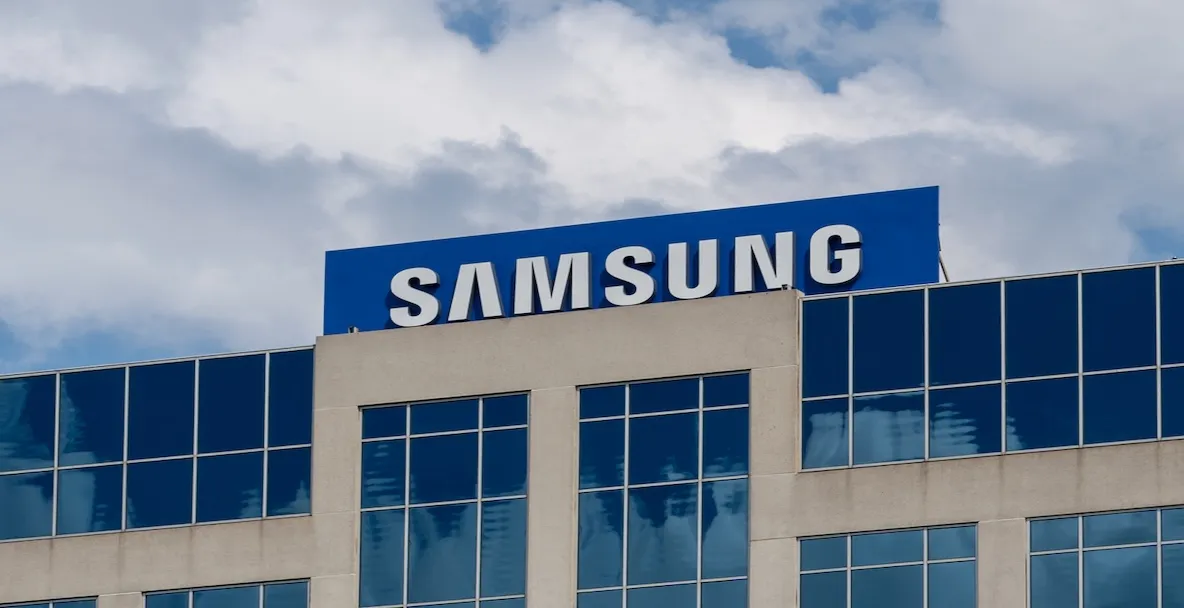
The last thing the semiconductor supply chain wants right now is another variable for disruption, but one is forming. Samsung’s labor union is planning an 18-day general strike starting May 21 to eliminate a performance bonus cap, according to TrendForce. If it proceeds, the timing couldn't be worse for a market already running lean on memory capacity.
Notably, TrendForce reports that roughly 70% of the union involved is concentrated in Samsung’s Semiconductor Division DS, meaning any work stoppage will hit the company’s most critical production operations. Samsung has estimated potential damages of between 5 trillion and 10 trillion won if the strike occurs.
Supply chain sources indicate that memory, DDICs, and PMICs would be among the first categories disrupted, threatening already constrained mature-node capacity. Embedded across consumer electronics, these components have already seen their lead times stretching amid a demand crunch. Meanwhile, rising power consumption in AI servers is also driving an increase in demand for PMICs and MOSFETs.
Zooming out, the impending strike threatens to collide with external factors that could have major implications for the chip sector. For one, TSMC has been planning to shut down some of its 8-inch fabs and has either stopped taking orders or is scaling back capacity for other legacy components. Samsung has adopted a similar stance with its own 8-inch lines. As a result, buyers are left with fewer fallback options if Samsung output drops.
Sources indicate that if a strike begins, disruptions could extend into the third quarter. Any additional shortage will increase chipmakers’ pricing power and further contribute to soaring memory prices.
A potential multi-quarter disruption at the world’s largest memory manufacturer, coupled with tightening mature-node supply across the industry, is a scenario that requires action now. Sourceability helps customers mitigate this type of concentrated supplier risk through proactive supply chain management, leveraging a portfolio of vetted alternative suppliers and inventory to maintain continuity when primary sources come under pressure.


