Rising component costs and material risks are growing in 2026
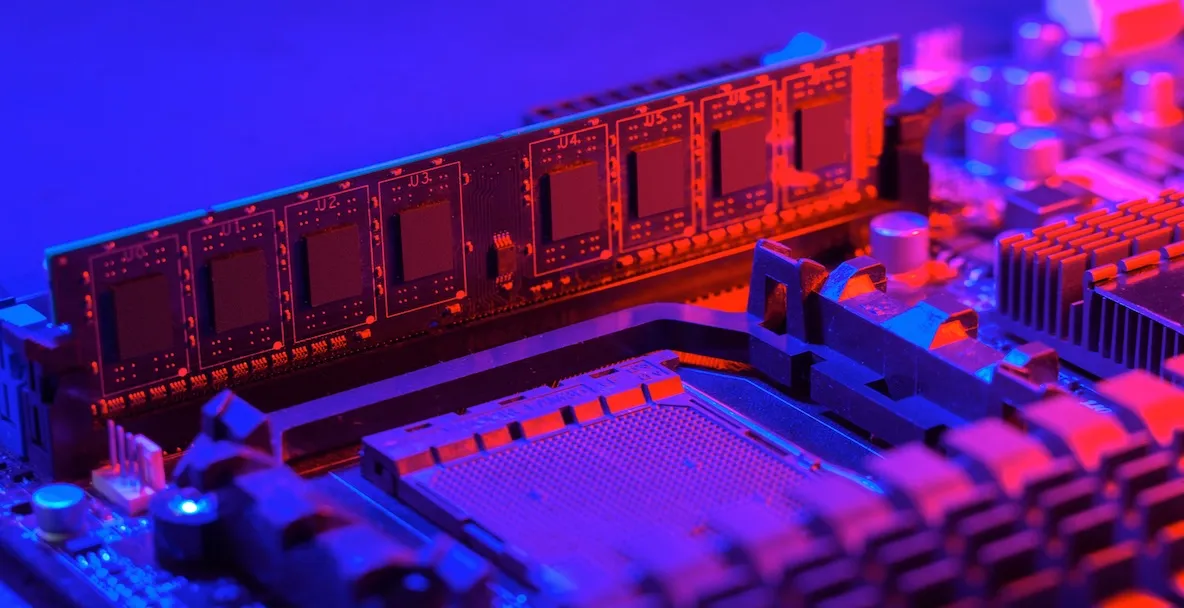
Memory pricing trends are diverging across legacy and next-generation components, with the former seeing a surge as advanced products stall. Over the last several quarters, memory has been the primary battleground between AI-driven demand and supply availability. Recently, broader upstream categories, from substrates to plastics, have also been rising, adding pricing pressure on traditional, high-volume components.
Simultaneously, critical materials, such as helium, tungsten, and naphtha, are becoming increasingly constrained as geopolitical risks tied to key transit routes rise. With the market facing unprecedented structural shifts amid the rise of artificial intelligence, end users are struggling to adapt to new price adjustments.
Diverging memory pricing and rising component costs
The memory market has diverged from moving as a single cycle, with DDR3, DDR4, and DDR5 each responding to unique demand profiles. As such, pricing across the three generations now tells the story of a supply chain being pulled in competing directions.
According to TrendForce’s latest spot price update, DDR3 is the one bright spot in an otherwise difficult market. Supported by its price advantage relative to newer standards, DDR3 continues to attract urgent orders from legacy and industrial buyers, with spot prices holding a steady upward trajectory.
DDR4 and DDR5 are different stories. Both segments are witnessing slumping demand largely thanks to end-users struggling to absorb excessive price increases. Some buyers have resorted to placing smaller orders, hoping to time larger buys down the road if-and-when prices drop.
With AI infrastructure buildout pulling the bulk of advanced DRAM capacity toward HBM and server-grade DDR5, mainstream buyers are left competing for a narrower pool of supply at prices dictated by data center demand rather than their own. Legacy buyers, meanwhile, face diminishing production interest from suppliers who have been steadily winding down older nodes to free capacity for higher-margin products.
The cost pressure doesn’t stop with memory. PC manufacturers are reporting rising costs beyond semiconductors, noting higher prices for PCBs, plastics, and other inputs.
Such broad cost inflation across the entire BOM makes the downstream math unforgiving. OEMs are caught between absorbing significant margin erosion and passing increases on to customers who are already showing price resistance. That dynamic has led experts to push their 2026 sales forecasts lower for PCs, smartphones, and other consumer-grade electronics.
For procurement teams, the takeaway is that memory price volatility can’t be accounted for in a vacuum. Though it’s a leading cause of cost pressures right now, those same increases are now working their way through the rest of the BOM.
Sourceability’s Datalynq market intelligence tool helps customers manage cost volatility with real-time visibility into market pricing trends. Buyers can use these insights to guide smarter sourcing decisions that account for current market dynamics rather than reacting to them after the fact. Paired with our quarterly lead-time report, Sourceability gives customers the tools to identify tightening conditions earlier and adjust inventory positioning before cost increases are locked in.
Material constraints and geopolitical risks threaten supply stability
Memory pricing may get most of the headlines, but there are other cost pressures building upstream that must be monitored. The materials that make chip fabrication possible in the first place, including tungsten, helium, and naphtha, face risks from a multitude of sources.
Tungsten’s spot price doesn’t often appear in everyday discussions, but it’s of great concern to those in the business of making semiconductors. According to Almonty Industries’ recent pricing data, tungsten averaged around $920 per MTU at the start of the year. By the first week of April, that figure climbed to nearly $2,995. More than a threefold increase in the span of three months is a worrying sign.
Tungsten is essential to advanced chip structures with uses in interconnects and barrier layers at leading-edge nodes where its hardness and heat resistance have no practical substitute. Geographic supply concentration complicates the equation. China controls the lion’s share of global tungsten production, and the metal’s demand trajectory only heightens the effect of this vulnerability.
Almonty’s supply and demand modeling projects tungsten demand will consistently outpace supply through 2033.
Helium offers risk of a different nature—one that has moved from latent to acute almost overnight. In 2025, Qatar produced roughly 63 million cubic meters of helium, accounting for one-third of global supply. Following Iranian attacks on production facilities in the Middle East, estimates suggest roughly 5.2 million cubic meters per month have been removed from the market, according to The Oregon Group.
Helium spot prices have already doubled since fighting in the Middle East began, and analysts fear potential spikes could range from 50% to 200% if severe shortages persist.
Semiconductor fabs rely on helium for cooling, leak detection, and precision lithography. Unlike many industrial gases, there is no substitute for helium in these applications.
Reports from South Korea indicate that chipmakers have enough helium inventory to last until at least June without resupply. However, they are already paying a significant premium, which will only increase the longer the U.S.-Iran conflict continues.
Meanwhile, this disruption has positioned the U.S. (the world’s largest helium producer with an estimated 81 million cubic meters in 2025) as a critical node in the semiconductor value chain. The fallout gives Washington unexpected strategic leverage over a key input as buyers seek helium security.
Then there is naphtha, a petrochemical feedstock that underpins the entire fab process despite rarely surfacing in semiconductor policy conversations. Taiwan processes some five million metric tons of naphtha annually, with a significant portion of it flowing downstream to TSMC. The island’s largest private refiner and a critical upstream supplier of the chip sector, Formosa Petrochemical, agreed in October 2025 to stop purchasing Russian naphtha.
That decision, made under intense geopolitical pressure rather than logistical influence, has narrowed Taiwan’s sourcing options at the exact time Middle East supply routes are falling under stress. Notably, due to the lengthy refinement process from crude naphtha to fab-grade chemical, disruption lags by several weeks.
That said, projections from Fab Economics and the Global Semiconductor Policy Council suggest that a four-week disruption to semiconductor inputs such as naphtha could wipe out as much as $500 billion in market capitalization across the top ten logic, memory, and analog producers.
The Hormuz closure passed the four-week mark on March 28th, and despite ceasefire talks, no clear resolution is in sight. With pressure building upstream, the window of safety is narrowing, and buyers at all levels of the supply chain must be ready.
What connects tungsten, helium, and naphtha is the geographically concentrated nature of their supply vulnerabilities. This, along with being structurally difficult to diversify, leaves them almost entirely unsolved in the contingency planning that governs most procurement strategies. Companies that have invested in stress-testing their memory and logic sourcing must confront the reality that the next shortage might come not from a fab, but from a gas plant, refinery, or mine operating in a conflict zone.


