Memory price hikes loom as chipmakers race to detect defects
A new wave of price increases in memory and advances in semiconductor defect detection underscore mounting cost, quality, and supply pressures across the global chip market.
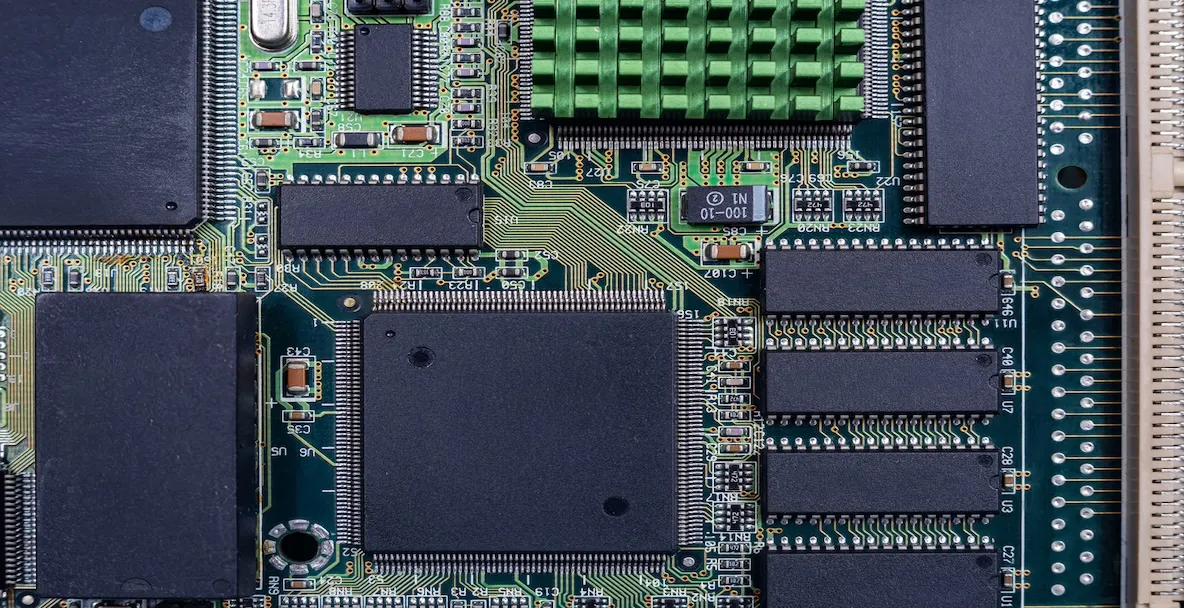
Memory shortages are driving prices up as chipmakers sharpen their focus on quality.
As semiconductor demand continues to accelerate, the industry is once again bracing for a wave of growing costs. TrendForce reports that a new round of memory price increases is expected as supply remains tight. Over the last several weeks, major device makers have adjusted procurement strategies, with pricing fluctuations taking center stage. This trend is expected to continue through 2026, as AI demand remains high.
At the same time, advances in semiconductor inspection technologies are highlighting how even microscopic defects can have outsized impacts on yield and reliability. These "mouse bite" defects could help researchers uncover new ways to improve anything from smartphones to quantum computers. In an age where Moore's Law may no longer apply, the next battlefield in strengthening chip performance won't be size but quality.
Memory price wave builds amid ongoing supply crunch
The memory market’s pricing trajectory, already steep in the early months of 2026, is about to get steeper. TrendForce is warning that a new “price wave” began forming in March that carries real downstream consequences for every tier of the electronics supply chain. In response, OEMs are already moving to shield their production and bottom lines.
The numbers are stark. TrendForce data puts Q1 2026 contract price increases for DDR4/DDR5 at 105-110% year-over-year, with mobile DRAM not far behind at 88-93%.
For procurement teams still operating on pre-2025 cost assumptions, these updated figures should be a blaring red alarm. Absorbing such significant price hikes isn’t easy. Nor is adjusting BOMs to account for parts with limited inventory.
Device makers are responding accordingly. Lenovo has warned channel partners that select commercial devices will see price adjustments in early March. Acer already announced price hikes for gaming products in Japan, citing DRAM and SSD costs as the primary drivers. TrendForce suggests Japanese PC maker VAIO could follow suit next month.
In the smartphone arena, the picture is much the same. Samsung raised prices for select U.S. and South Korean models at its Unpacked 2026 event last month. The tech giant’s flagship Galaxy handsets saw increases of between 4.7% and 10%.
Chinese vendors, including brands like Oppo, Xiaomi, and Honor are taking similar steps to protect their margins. That trio and others are allegedly planning to coordinate a price adjustment this month.
Of course, the structural driver at the heart of this wave is well understood at this point. AI infrastructure buildouts continue to devour a disproportionate share of DRAM and NAND capacity, leaving consumer and commercial electronics buyers to compete for what’s left.
Suppliers have little incentive to rebalance the market as margins on AI-optimized memory remain far superior to commodity grades. Unfortunately, there are no capacity expansion projects on the horizon that would meaningfully change that calculus.
For procurement leaders, this wave isn’t one to wait out, and the window to get ahead of it is closing. As prices continue pushing higher, monitoring early pricing signals through market demand forecasting will be an essential piece of the puzzle.
With visibility into upcoming price adjustments, Sourceability helps customers diversify their sourcing strategies and optimize inventory planning to protect margins during periods of constrained availability.
New techniques reveal hidden semiconductor defects
As chipmakers grapple with tightening supply and surging prices, a parallel challenge has quietly been intensifying on the factory floor. Chipmakers are searching for better ways to see what’s going wrong inside a chip when the channels of billions of transistors are just a few atoms wide.
A new study published in Nature Communications in late February by a Cornell University led team has produced just that. The research, in partnership with TSMC and Advanced Semiconductor Materials (ASM), has produced the first direct, atomic-resolution images of defects inside modern transistor channels.
The implications for yield, reliability, and long-term manufacturing competitiveness are significant.
The technique anchoring the research is Multislice Electron Ptychography (MEP), a computational imaging method that uses an electron microscope pixel array detector (EMPAD) to capture scattering patterns as electrons move through a transistor. By analyzing how those patterns shift across scan points, researchers can reconstruct a three-dimensional map of the transistor’s interior.
Chip titans like Intel, TSMC, and Samsung are building their most advanced nodes around Gate-All-Around (GAA) transistors. When the technology was applied to these chips, it revealed a pattern of roughness along the transistor channel walls. Lead researcher and Cornell doctoral student Shake Karapetyan has dubbed the pattern “mouse bites” after likening the hunt for imperfections to following a mouse through a maze.
At this sub-microscopic scale, surface roughness directly impedes electron flow, in turn degrading power efficiency and introducing variability. The latter makes yield control at advanced nodes incredibly costly and unpredictable.
The discovery of the defects isn’t the most significant part of this research. Engineers have long known those issues exist. More important is the ability to characterize them precisely for the first time.
Teams previously had to rely on indirect measurements and 2D projections to infer what was happening. The new method now offers a direct diagnostic window into the fabrication process, allowing engineers to identify which specific stages introduce damage.
As the industry pushes into GAA and beyond, defect control is becoming a critical differentiator. Better defect characterization at the development stage means fewer costly surprises in high-volume production, less wafer scrap, and ultimately, more predictable capacity. For a market already strained by AI-driven demand and constrained supply, every percentage point of yield improvement carries immense economic weight.